
The strongest events cover their costs and move into profit before the evening. The races then provide the entertainment and create additional income through the tote and other carefully planned activities. A normal programme has eight pre-recorded races: four before a 30-minute interval and four afterwards.
Raise money before the night
Do not rely on tote income alone. The important work is completed in advance:
- sell sponsorship for every race
- sell all horse ownerships and, if desired, the jockeys
- ask businesses and supporters to donate suitable prizes
- promote the event and sell admission tickets in advance where appropriate
- make it clear which charity or good cause will benefit
Race sponsorship and race cards
A customised race card gives sponsors, owners and jockeys visible recognition. Each race can carry a sponsored title, while the horses can be named to suit the organisation, local area or event theme. Names should be good-natured and appropriate for the audience.
Print enough copies to place at least one race card on every table. Show the running order, horse names, owner names and any jockey names or sponsor acknowledgements you have chosen to include.
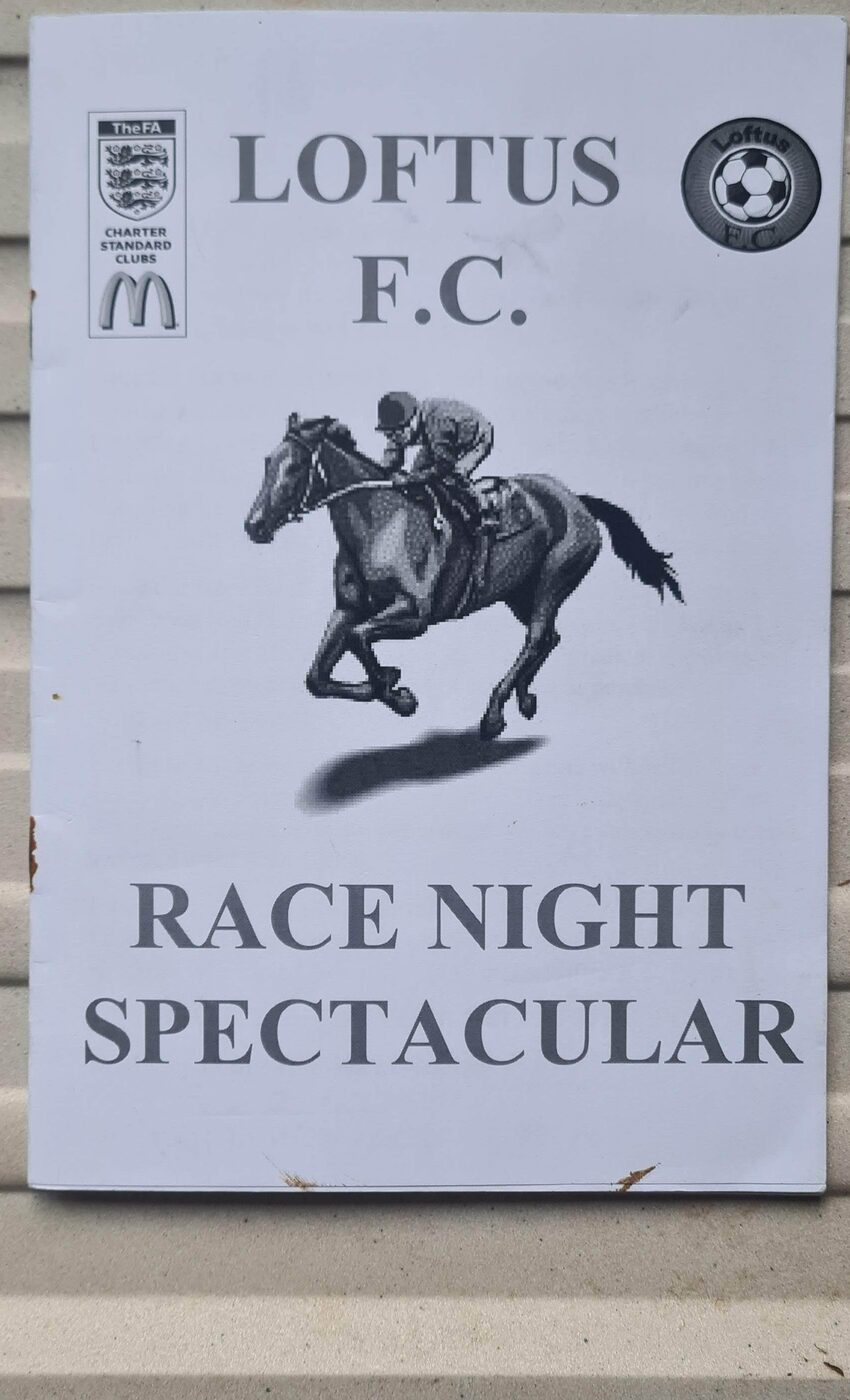
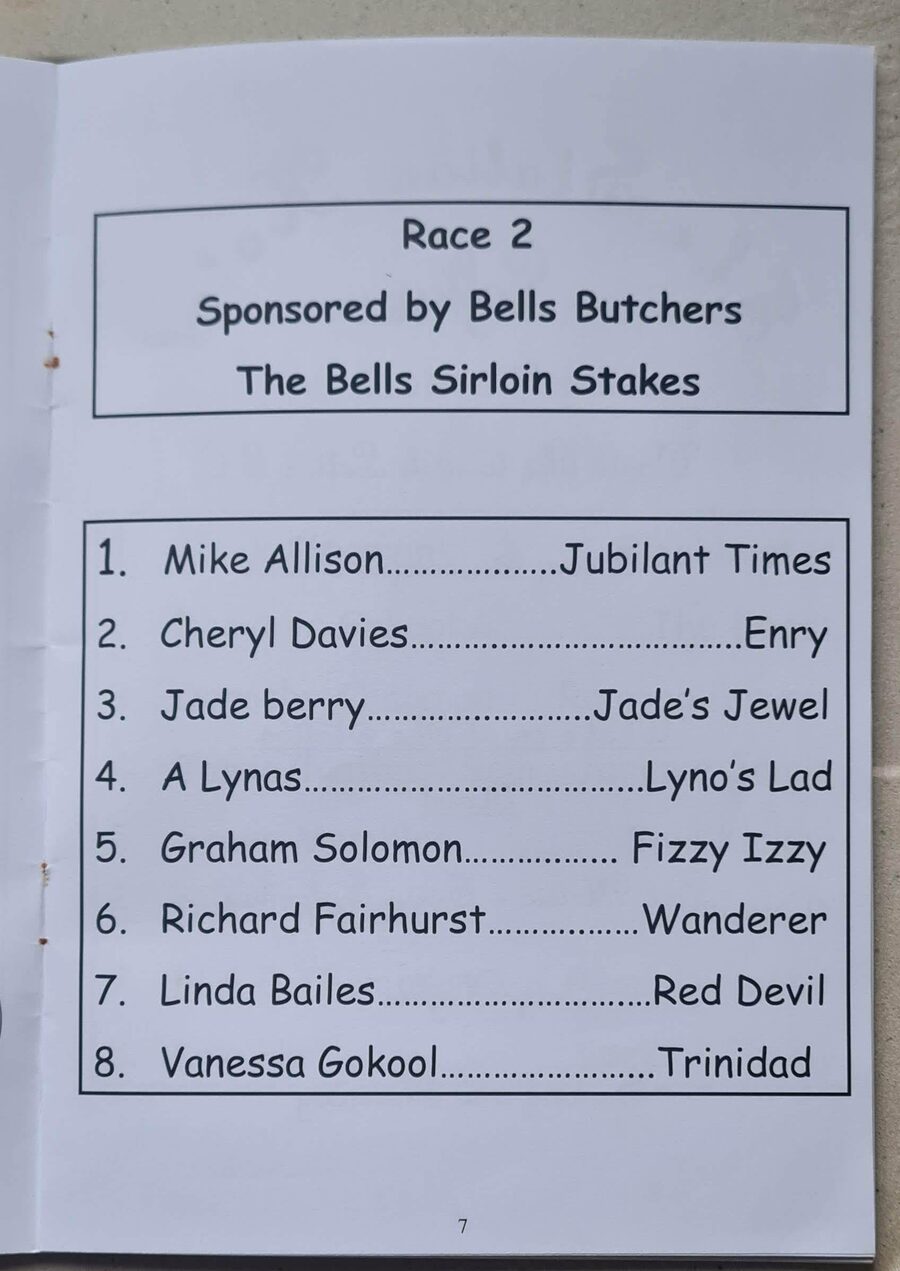
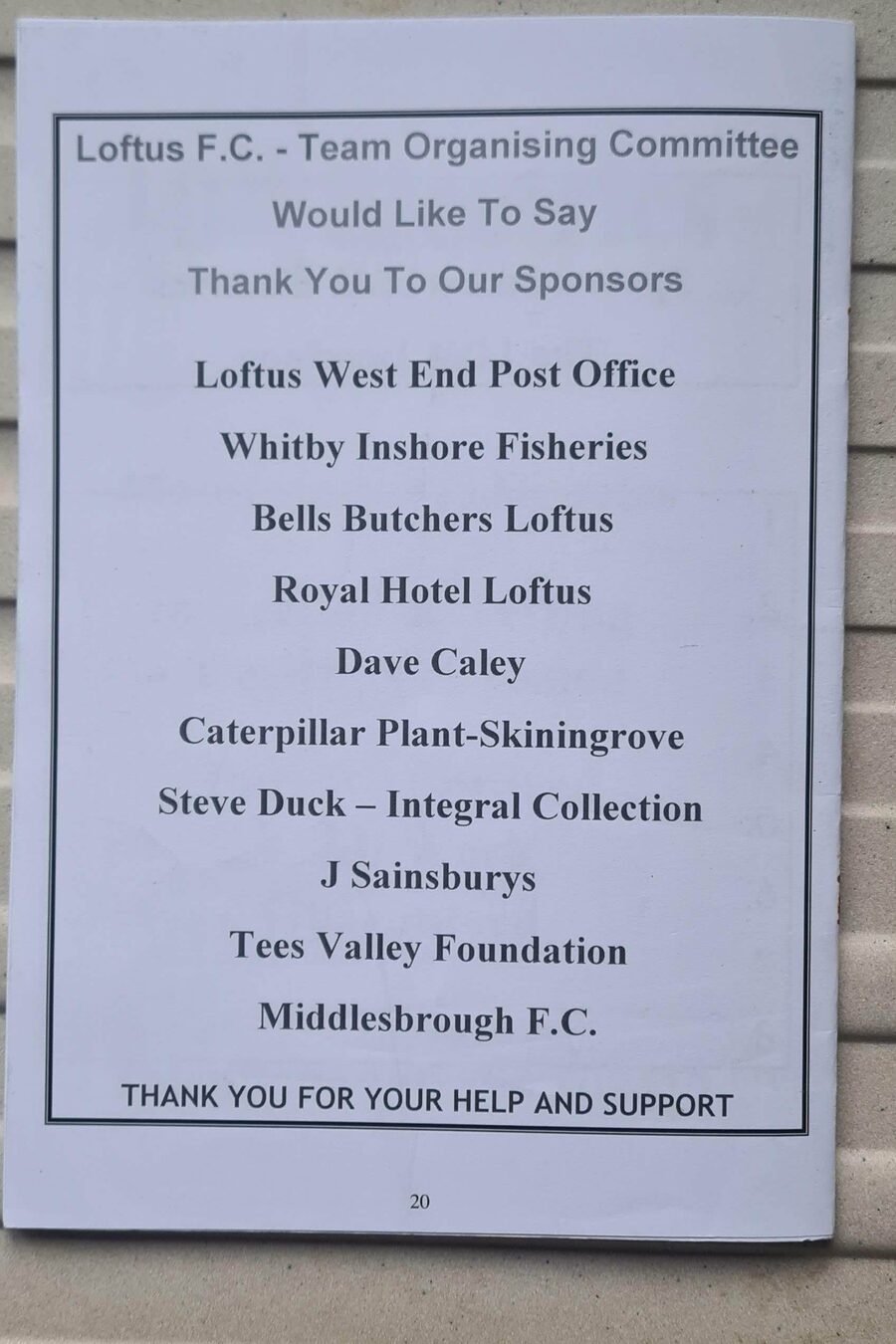
Historical example showing how one organiser presented its event, races and sponsors. Click an image to enlarge it.
Running the tote
The usual arrangement is £1 per bet. Each guest chooses a horse and receives the corresponding numbered tote ticket. The helpers record the bets, collect the money and close the tote before the race begins.
- Issue one correctly numbered tote ticket for every £1 bet and keep an accurate tally.
- After the result, total the takings and count the winning tickets.
- Allocate 50% of the race takings to the charity.
- Divide the remaining 50% equally between the winning tickets.
- Pay the winners and prepare the tote for the next race.
Example payout
| Calculation | Amount |
|---|---|
| 50 bets at £1 | £50 total takings |
| Charity share at 50% | £25 |
| Winning-ticket pool at 50% | £25 |
| Five winning tickets | £25 ÷ 5 = £5 for each winning ticket |
The organiser should provide a suitable cash float, including plenty of £1 coins, and nominate someone to hold and reconcile the cash. A cash-only tote is normally the clearest arrangement unless another method has been agreed and tested beforehand.
Helpers and prize presentations
Allow two reliable tote helpers for every 50 guests: approximately four helpers for 100 guests, six for 150 guests and so on. Helpers may change at the interval, but the handover must include the float, tickets, takings and written totals.
| Guests | Suggested tote helpers |
|---|---|
| Up to 50 | 2 |
| About 100 | 4 |
| About 150 | 6 |
| Larger events | Increase proportionately and agree the layout in advance |
The organiser supplies prizes for the winning owner and, if jockeys have been sold, the winning jockey. These may be cash, wine or suitable donated prizes. The winning owner’s prize, and the winning jockey’s prize where included, is presented at the end of each race while the tote helpers calculate and pay the winnings.
An optional auction race
If an auction race is included, its horses are not sold beforehand. They are auctioned in the room immediately before that race. Once the auction has finished, the tote opens in the usual way for normal betting.
A commonly proposed arrangement is to divide the auction proceeds equally between the owner of the winning horse and the charity. Because auction formats can engage different gambling rules, the organiser must check the current Gambling Commission guidance before adopting this arrangement and obtain appropriate advice if uncertain. An alternative is a genuinely worthwhile fixed prize advertised in advance.
An optional Tri Cast
A Tri Cast sheet can be supplied on request and is best sold in advance. Introducing it on the night adds work and can dilute ordinary tote betting. Telephone Ron or Hazel for advice before deciding whether it suits your event.
Room layout
The room must be large enough for the audience, with clear sightlines to the screen. Position the projector and screen at one end and the tote at the other. Keep the projector table and cable route away from entrances, exits, the bar, toilets and normal foot traffic.
The event can be held indoors or in a properly equipped, weatherproof marquee, provided the projection area can be made dark enough, the floor and electricity supply are suitable and the equipment is protected from weather and public access.
What Jolly Good Productions normally provides
- projector and screen
- DVD player
- two 100-watt speakers and a microphone
- an iPod for background music while betting takes place
- extension cable and tote tickets
- the races, compere service and a briefing for tote helpers
What the organiser provides
- a suitable room or properly equipped covered marquee
- a safe projector position with an electrical socket within four metres
- free parking close to the entrance and carrying help where required
- enough tote helpers, an adequate cash float and secure cash handling
- printed race cards, with at least one per table
- owner, jockey, raffle, tombola and auction prizes as applicable
- food, refreshments, ticket sales, publicity and other fundraising arrangements
A typical running order
| Time | Activity |
|---|---|
| 7.00 pm | Doors open and guests arrive |
| 7.15 pm | Tote helpers receive their briefing |
| 7.25 pm | Welcome and explanation of the fundraising purpose |
| 7.30 to 8.30 pm | First four races |
| 8.30 to 9.00 pm | Interval, food and other fundraising activities |
| 9.00 to 10.00 pm | Final four races |
| After racing | Raffle or tombola draw, final announcements and close |
Times can be adjusted to suit the venue and other activities. A raffle or tombola can work well after the final race, particularly where prizes have been donated. Avoid adding so many extras that the racing loses momentum.
Common planning mistakes
- waiting until the event night to begin fundraising
- providing too few helpers or failing to brief them
- running short of £1 coins, tote tickets or race cards
- allowing the tote queue to block an entrance, exit, bar or toilet route
- allowing people close to the projector or across cables
- adding unnecessarily complicated fundraising systems
- leaving prizes until the last minute
- using an auction, raffle or other format without checking the rules
Information needed for a quotation
- event date, venue address and fundraising purpose
- expected guest numbers and proposed start and finish times
- room or marquee details, floor space and screen location
- parking, loading access, stairs and carrying distance
- location of a suitable electric socket
- whether you plan sponsorship, horse or jockey sales, an auction race, raffle, tombola, food or Tri Cast
Legal responsibility
Fundraising Race Nights can fall within exemptions for non-commercial gaming, but the exact rules depend on how the event, stakes and prizes are arranged. The organiser is responsible for ensuring that the event complies with current law, venue requirements and any applicable permissions. Jolly Good Productions can explain the entertainment and operating arrangements but cannot provide legal advice.
Check the current official Gambling Commission guidance on fundraising Race Nights before advertising or selling gaming-related products. Obtain independent advice if you are uncertain, particularly where an auction race, raffle, lottery, unusual stake, cashless system or different prize arrangement is proposed.
Final advice
Secure as much income as possible in advance, keep the arrangements straightforward and ask questions early. Ron or Hazel will be happy to explain how the races, tote, helpers, prizes and running order work.
Bookings and cancellations are subject to the current Terms and Conditions.